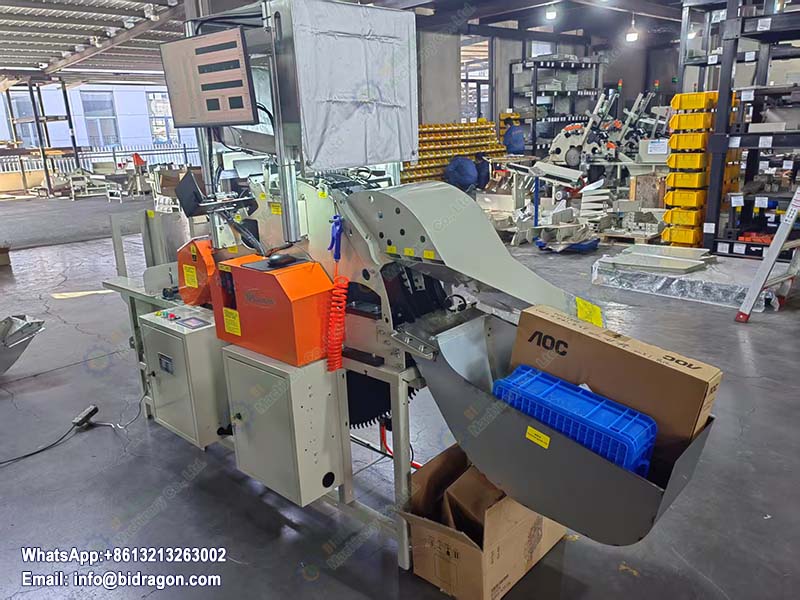
We recently received an order from a regular Russian client for a double cameras wooden coffee stirrer sorting machine. We introduced our latest model, which features a fine-tooth drive system and faster conveyor shaft speeds compared to previous versions. The fine-tooth gear assembly—used to drive the conveyor shaft and the mechanisms for sorting, feeding, and counting—utilizes gears with smaller tooth pitch and a higher tooth count. The advantages of this fine-tooth drive include smoother operation, reduced backlash, and minimal slippage, ensuring that slender wooden sticks do not jam or drift off-track.
Doubled Capacity: Increases hourly output on a single production line without requiring additional floor space; eliminates the need to run extra equipment during high-volume periods.
Superior Conveying Stability: Prevents slender wooden sticks (which are thinner and lighter than ice cream sticks) from tilting or stacking during high-speed transport, thereby reducing missed detections and false positives during visual quality inspection.
Reduced Damage: The fine-tooth drive offers better cushioning, preventing dents or scratches on the wooden sticks during high-speed transport.
Precise Synchronization: High rotational synchronization between the conveyor shaft, sorting gears, and counting mechanism ensures seamless coordination of bundling, packaging, and sorting actions.
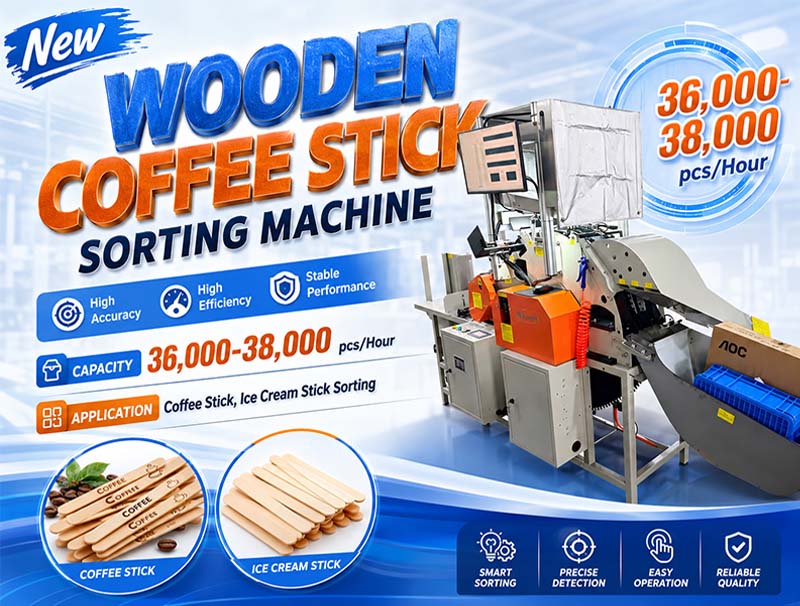
Coffee stirrers are thinner and lighter than ice cream sticks, making them highly prone to drifting off-track during high-speed transport.
Older machines with coarse-tooth gears tend to cause material stacking when speeds are increased; therefore, a fine-tooth drive system is essential to maintain orderly feeding while boosting conveyor speeds. This machine is specifically designed for the high-volume quality inspection of small-format disposable wooden products.
We provide a comprehensive operation manual and instructional videos covering all aspects of use—such as powering the machine on and off, adjusting for different lengths, fine-tuning settings for thin materials, configuring parameters via the inspection interface, and troubleshooting common issues.
Before shipment, we conduct a test run and send the footage to the client (using wooden coffee stirrers that match the client's specified dimensions). The machine is packaged using international standard export-grade plywood crates.