What is a tongue depressor? – It's the small tool doctors use to gently press down your tongue when they ask you to say "ah"! It's not only useful for oral and throat examinations, but also for daily oral care, crafts, and many other scenarios – its practicality far exceeds expectations!
How important is choosing the right one? – A good choice means it won't irritate your mouth or scratch your mucous membranes, and it helps prevent cross-infection, allowing both adults and children to cooperate comfortably; a poor choice might mean an unsuitable size causing nausea, or a rough material that injures the mouth, affecting the user experience and potentially posing safety hazards (the core principle is: comfort, safety, and effectiveness are all essential).
.jpg)
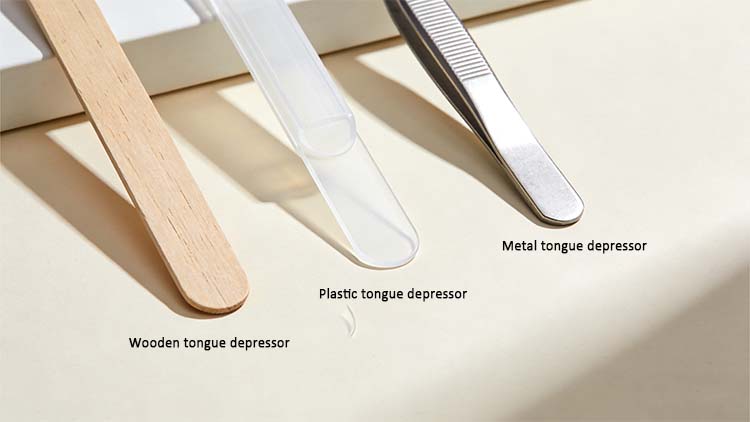
Wooden type: The most common is birch wood, with a smooth, burr-free surface and no odor. It's naturally biodegradable after use, offering excellent value for money. It's especially suitable for one-time medical examinations and daily home use; you can throw it away after use without feeling wasteful.
Plastic type: Available in both disposable and reusable versions, and also in various colors. They are aesthetically pleasing, lightweight, and easy to carry, making them convenient for emergency use or home self-examination. However, be sure to choose food-grade PP or silicone materials to ensure they are non-toxic and harmless. The only minor drawback is that they are slightly less environmentally friendly than wooden ones.
Metal type: Mostly made of stainless steel, with a thickened design for superior durability. They can also be sterilized at high temperature and pressure, allowing for repeated use without waste. Suitable for professional medical settings (such as deep throat examinations and minor oral surgeries), be sure to choose ones with rounded edges to avoid scratching the oral mucosa.
Adult size: Around 16cm is the ideal size. The length is just right, providing good control for both doctors and home users. It's not too short to reach the back of the tongue, nor too long to hinder manipulation.
Children/Infant size: A smaller 14cm size is more suitable! It fits a child's small mouth, and gently pressing down the tongue is enough, effectively reducing nausea and resistance. Parents can also easily control the pressure. Special Edition: 18cm Professional Extended Version (suitable for deep throat examinations and complex oral procedures in adults), also available in specialized sizes for veterinary examinations of pets and industrial auxiliary operations. Simply choose the specific size you need.
Sterile Packaging: Essential for hospital examinations, oral surgery, and emergency situations! Typically sterilized with ethylene oxide, the packaging will indicate the sterilization date and expiration date. Always choose packaging that is intact and undamaged to avoid contamination.
Non-Sterile Version: Sufficient for home self-examination (e.g., checking for throat redness and swelling, cleaning the tongue), handicrafts, and school educational demonstrations. Bulk packaging is more cost-effective; simply wipe with an alcohol swab before use for peace of mind.
Child-Friendly Version: Comes with sweet flavors like cherry and grape, eliminating the "cold, sterile medical feel," so children no longer resist opening their mouths for examination.
Safety-Focused Version: The surface is finely polished with no burrs, and the edges are rounded and smooth. Even if it accidentally touches the oral cavity wall, it won't scratch the mucous membrane.
Professional Auxiliary Version: Features clear markings (for simple measurement of tongue coating thickness and ulcer size), or uses an abalone shell-like curved design (conforming to the tongue's curvature, providing stable pressure without discomfort), suitable for professional medical or meticulous care.
Essential Configuration: Sterile individual packaging + appropriate size for the target population (adults/children/infants), must comply with national medical device standards (registration number will be indicated on the packaging).
Key Considerations: Disposable versions must be disposed of as medical waste after use and cannot be reused; reusable metal versions must be sterilized with high temperature and pressure after each use, strictly following hygiene regulations to prevent cross-infection.
Core Needs: To securely hold the tongue still during examinations or minor procedures, without interfering with the doctor's work; also useful for cleaning food debris from braces and hard-to-reach areas between teeth.
Recommended Styles: Thickened stainless steel (durable and robust, reusable after sterilization), or disposable sterile plastic (single-use, hygienic and worry-free). Prioritize those with rounded edges and a length of approximately 16cm for greater flexibility.
Home Oral Care: For self-examination of the throat, cleaning the tongue, and relieving mild oral inflammation, non-sterile wooden or ordinary plastic models are sufficient, offering good value for money. Simple disinfection before use is recommended.
Children's Applications: For speech therapy training and assisting with remote self-examinations by doctors, choose a smaller 14cm size with a flavored option. Rounded edges and no burrs ensure greater acceptance by children.
Creative Uses: DIY crafts (making small houses, decorative paintings), beauty aids (mixing depilatory cream, face masks, nail wax), disposable wooden models are the most cost-effective, inexpensive, and non-stick, and can be discarded after use without cleaning.
Tactile Test: Upon receiving the product, feel the surface. It should be smooth with no bumps or granular texture, and the edges should be free of burrs. Gently squeeze it; the hardness should be sufficient, bending no more than 1.5cm under approximately 1kg of pressure. This prevents the spatula from being too soft and unable to hold the tongue down.
Compliance Check: For medical use, always check for the "two certificates"—medical device registration certificate and sterilization certificate. For products sterilized with ethylene oxide, the residue must be ≤10mg/kg, meeting safety standards.
Packaging and Storage: When purchasing sterile products, check if the packaging is intact and free from damage or leaks. Store in a dry, dark, and well-ventilated place, away from moisture and odors, to prevent contamination due to damaged packaging.
|
Demand scenario |
Recommended material |
dimension reference |
Sterilization requirements |
Key functions |
|
Adult hospital examination |
Wood/sterile plastic |
16cm |
sterility |
Free of burrs, with rounded edges |
|
Oral examination for children |
Flavored plastic/wood |
14cm |
sterility |
Mild and palatable, small and plump |
|
Home self-inspection/care |
Wood/common plastic |
16cm |
non-sterile |
Smooth surface, easy to clean |
|
Professional medical care/surgery |
stainless steel |
16-18cm |
sterilisable |
Thickened for durability, conforming to the tongue surface |
|
Handicrafts/beauty products |
Disposable wood |
Arbitrary norm |
Non-sterile |
Generously sized and reasonably priced, non-stick material |
Don't be tempted by cheap, burr-ridden options: Some low-priced wooden models are not well-polished, with noticeable burrs that can easily scratch the oral mucosa and even cause infection.
Avoid hard metal materials for children: Metal materials are hard, and children's mouths are delicate. If they move around, they can easily injure themselves. Prioritize soft, non-toxic plastic or wooden options.
Reject "three-no" products for medical use: Absolutely do not buy tongue depressors without packaging, brand identification, or a medical device registration certificate. Hygiene and safety are not guaranteed.
Choose the right channels for online purchases: Prioritize official flagship stores and medical device specialty stores. Carefully check product parameters and user reviews to avoid buying counterfeit or inferior products.
Choosing a tongue depressor isn't complicated at all. By following these four steps – "check the material, select the size, match the scenario, and verify the quality" – you can accurately choose the right one for your needs. Whether for professional medical use, daily home use, or creative DIY projects, choosing the right one will not only make it easier to use but also avoid safety hazards, truly achieving "big results with little money"! We hope this guide will help you avoid unnecessary detours.





